

Nuclear Tomorrow - September 2026
Nuclear Tomorrow is a newsletter that is issued monthly to identify press reports on developments in the field of nuclear energy. Topics are selected for their relevance to the impact of nuclear energy on global warming. The newsletter is written for members of the general public who are concerned with policy related to these issues. Postings are categorized as dealing with Technology (T), Policy (P), and/or Construction (C). In some cases registration or a fee is required to access an article. Hyperlinks are provided to connect newsletter posts to the referenced publication. (See hot buttons associated with each posting) The newsletter is intended to expand on topics included in the book, “Nuclear Energy: Boom, Bust, and Emerging Renaissance,” which has recently been published by Oxford University Press. The author of the book and of this newsletter is Edward A. Friedman, Emeritus Professor of Technology Management at Stevens Institute of Technology in Hoboken, New Jersey, USA. The book is available for purchase via the Oxford University Press Website. The following link provides access to the book:
https://global.oup.com/academic/product/nuclear-energy-9780198925781?lang=en&cc=gb#
NOTE - A 30% Discount is available using the code AUFLY30
for purchases through Oxford University Press
count
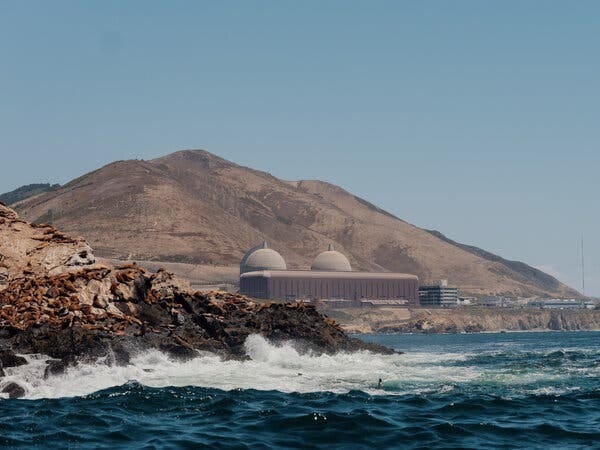
Established nuclear plants like Diablo Canyon in California tend to produce relatively affordable power.
1.
Why California is Reconsidering its Decision to Shun Nuclear Power (P)
California lawmakers are considering extending the life of the Diablo Canyon reactors and of lifting a moratorium on new reactors. They have become less worried about the storage of spent fuel and more concerned about meeting clean energy goals. They aim to acquire 100 percent of electricity from clean energy sources by 2045. In 2026 they obtained 70 percent of electricity from clean sources. Diablo Canyon’s two reactors began operations in 1985 and 1987. They are the sole nuclear reactors currently operating in California and are slated to stay open until 2030. Currently plans are being formulated to reach the 2045 goal.
2.
U.S. To Lend $1.9 Billion to Restart a Shuttered Nuclear Plant in Iowa ( C )
The Energy Department plans to lend NextEra Energy $1.9 Billion to reopen the Duane Arnold nuclear plant in Iowa which ceased operating in 2020. No company has successfully restarted a U.S. reactor that has previously been retired but there are now three big attempts to do so. In Michigan, Holtec International is working to reopen the Palisades nuclear plant which was shuttered in 2022 and in Pennsylvania, Constellation Energy is engaged in restarting the Three Mile Island plant that was closed in 2019. Their time table for restarting this reactor is 2029. These are the only three closed reactors that are judged to be in a condition that will allow reopening in the U.S..
3.
New 10 MWe ocean-cooled nuclear reactor aims to power 15,000 coastal homes ( C )
Bluecore Energy, a startup is planning to build modular reactors placed on floating barges in the Port of Long Beach, California. Their goal is to build 10 MWe water cooled reactors on barges that could power 15,000 nearby homes and operate for many years on a single fueling. The design will accommodate scaling up by chaining such units together.
4.
Taiwan reverses course on nuclear phase-0ut, plans to restart reactor by 2028 (P)
Taiwan, which closed its No. 3 reactor in 2026 plans to restart it in 2028. Soaring electricity demand due to AI developments was a significant factor in this change of policy. Taiwan’s large semiconductor industry also contributes to this energy demand. This action has gained public support.
5.
Is the U.S. - Saudi Nuclear Deal Moving From the Gold Standard to a Gilded Standard? (P)
A civil nuclear Cooperation agreement between the United States and Saudi Arabia is with Congress for review. Congress needs to review provisions of this agreement concerning the ability of Saudi Arabia to enrich uranium and to adhere to the Additional Protocol of the International Atomic Energy Agency.The Additional Protocol gives the IAEA significant power to inspect a nation’s nuclear program to insure that it has peaceful objectives. There is considerable uncertainty regarding these components of the proposed agreement.
6.
South Korea Will Invest $100 Billion in U.S. Nuclear Sector to Boost AI and Appease Trump (P)
South Korea plans to invest $100 Billion in eight nuclear power plants and a natural gas project in Texas. The reactors will likely be built on federal land and use the AP1000 design of Westinghouse. This agreement has emerged from an escalation of threats from Trump to impose high tariffs on South Korea. The cost of implementing this plan will likely exceed $100 Billion by a significant amount.
7.
As the coast begins to crumble, the clock ticks on moving San Onofre’s radioactive waste ( C )
The San Onofre nuclear plant in California provided up to 2.2Gigawatts of Electrical power during its operating years from 1968 until 2013. It was closed when premature wear was discovered of tubes in its steam generators. This finding raised considerable concerns and calls for criminal investigations. Currently, the decommissioning is underway and concerns are being raised about plans to store high level waste in concrete silos at the site of the reactor. Storm-driven erosion is taking place and questions are being raised about having 3.6 million pounds of waste just 100 feet from the Pacific ocean. Parts of the coastline have crumbled into the sea. The plant’s owners have discussed moving the waste to higher ground if circumstances warrant such action. The situation remains under active review.
8.
Cameco Controls the Uranium Refinery That Puts Canada in the Driver’s Seat (P)
Cameco operates the Blind River uranium refining operation which is the world’s largest. It has 14% of the global market and it owns half of Westinghouse which is one of the largest service providers for the nuclear industry. Given the difficult relationship that has developed with the United States, Cameco enjoys a strategic advantage with the U.S. in the nuclear arena. Cameco is a key provider of nuclear fuel for the 94 reactors currently operating in the U.S. and will be a source of fuel for generation IV reactors that are scheduled to come online by 2030.
9.
Japanese utility execs resign over falsified quake safety data for 2 nuclear reactors (P)
The president and chairperson of Chubu Electric Power, Japan’s third largest utility, will resign after taking responsibility for manipulating earthquake safety data. An outside investigative panel found that the utility had been providing manipulated seismic data for years for its Hamako No. 3 and No. 4 reactors to insure that the figures met requirements. The utility is dropping its plans to restart these two reactors. This revelation is the result of a whistle blower report. Work is underway to implement structural modifications that are expected to result in new applications for a restart when the work is complete.
10.
Reactor licensing, decommissioning, operational oversight regulations addressed in latest NRC rulemaking (P)
Major revisions have been proposed in a variety of NRC regulations. The proposal, “Regulatory Enhancements for Reactor Licensing, Decommissioning, and Operational Oversight,” takes a similar approach to other proposed and final rulemakings issued this year in response to Executive Order 14300, “Ordering the Reform of the Nuclear Regulatory Commission,” with a focus on making affected regulations more flexible and open to risk-informed approaches.
“This major modernization of the NRC’s reactor regulations replaces outdated requirements with smarter, risk-informed approaches that reflect today’s technologies, knowledge and operating experience,” NRC Chairman Ho Nieh said in a statement. “The result is a regulatory framework that maintains strong safety margins while eliminating unnecessary constraints and providing the flexibility needed for America’s long-term energy security.”
Some of the key changes include:
Applying a more risk-informed, graded approach to earthquake design requirements.
Removing the expiration date for standard design approvals (SDAs). Currently, SDAs have a 15-year expiration date.
Adding flexibility for licensing reactor control room staff.
Clarifying and updating defect and noncompliance reporting requirements.
.
Updating requirements for reporting nonemergency events.
Aligning financial qualification requirements with the new general regulations.
Clarifying requirements for plant decommissioning and decommissioning trust funds.
These changes have been posted prior to NRC action.
11.
Nuclear Power Reactors in the World (T)
This is an annual publication that presents the latest data on nuclear reactors in the International Atomic Energy Agency (IAEA) member states.
12.
China takes advanced reactor expertise global through IAEA technology-sharing deal (P)
China has signed a deal with the International Atomic Energy Agency (IAEA) to cooperate in High Temperature Gas Cooled Reactor design and development. The two sides will also cooperate on supply chains and personnel training. This agreement will make this technology available to countries that interact with IAEA. This High Temperature Gas Cooled reactor technology has applicability for high temperature applications in fields of petrochemicals, steel, aluminum and concrete production. These applications contribute to about 14% of global warming greenhouse gas production which is one of the largest segments among non electricity based sources.
13.
Italy’s parliament paves the way for a return to nuclear energy (P)
Legislation has cleared both houses of Italy’s parliament for a return to nuclear energy. This legislation creates a framework for the enactment of regulations governing the development of nuclear energy. This is a turnaround from a referendum in 1987 that forced a curtailment of nuclear energy in Italy. Specific plans for development of nuclear energy are not yet on the table. When they are, they are expected to meet opposition from a significant component of society, especially with regard to waste disposal planning which has not yet been developed.
14.
The Philippine government is exploring nuclear power options to guard against global energy shocks. One proposal is to switch on a plant that has been mothballed for 40 years ( C )
The Bataan Nuclear Power Plant was built in 1984 during the regime of President Ferdinand Marcos Sr. but was never turned on. Designed to produce 621 megawatts it is being discussed as a potential source of power. While considered possible, the task is quite challenging. The plant was controversial from the start, situated as it is in a region that experiences earthquakes and volcano eruptions. A recent study concluded that to start the reactor would require replacing a quarter of the plant’s equipment at a cost of $1 billion. The plant’s development ended when Marcos went into exile in 1986 just two months prior to the Chernobyl disaster. It is not likely that this reactor could become operational until the late 2030s. Future energy planning in the Philippines is now under the direction of Ferdinand Marcos Jr., the son of 1980s dictator.
15.
Governor Hochul Announces $10 Million in NYPA Funding to Support Advanced Nuclear Workforce Development Programs Across New York State (P)
Governor Kathy Hochul announced that the New York Power Authority is establishing a $10 million program to prepare workers in the nuclear power industry. This adds to existing funds dedicated to prepare workers in construction trades for the nuclear power sector that she seeks to expand. She is moving ahead despite opposition from lawmakers who have raised objections to her initiative.
16.
A New Type of Small Nuclear Reactor Gets the Green Light in Tennessee (T)
The Tennessee Valley Authority was granted a construction permit by the Nuclear Regulatory Authority for a small nuclear reactor. This is only the second Generation IV nuclear reactor to receive approval. The first was the Natrium reactor of Bill Gates, a sodium cooled reactor that is under construction in Wyoming. This is the BWRX-300 designed by GE Verona which has a capacity of 300 megawatts which is about one fourth the output of what has been built previously in the United States. It uses the tested boiling water design, but in a smaller format. Plans are underway for the construction of other BWRX-300 reactors by the Tennessee Valley Authority following this initial reactor. Other utilities are planning to build this model reactor in Texas and in Canada.