

Nuclear Tomorrow - September 2025
Nuclear Tomorrow is a newsletter that is issued monthly to identify press reports on developments in the field of nuclear energy. Topics are selected for their relevance to the impact of nuclear energy on global warming. The newsletter is written for members of the general public who are concerned with policy related to these issues. Postings are categorized as dealing with Technology (T), Policy (P), and/or Construction (C). In some cases registration or a fee is required to access an article. Hyperlinks are provided to connect newsletter posts to the referenced publication. (See hot buttons associated with each posting) The newsletter is intended to expand on topics included in the book, “Nuclear Energy: Boom, Bust, and Emerging Renaissance,” which has recently been published by Oxford University Press. The author of the book and of this newsletter is Edward A. Friedman, Emeritus Professor of Technology Management at Stevens Institute of Technology in Hoboken, New Jersey, USA. The book is available for purchase via the Oxford University Press Website. The following link provides access to the book:
https://global.oup.com/academic/product/nuclear-energy-9780198925781?lang=en&cc=gb#
NOTE - A 30% Discount is available using the code AUFLY30
for purchases through Oxford University Press
The release date for the print editions is October 3, 2025
1.
It’s past time to start protecting US nuclear power reactors from drones (P)
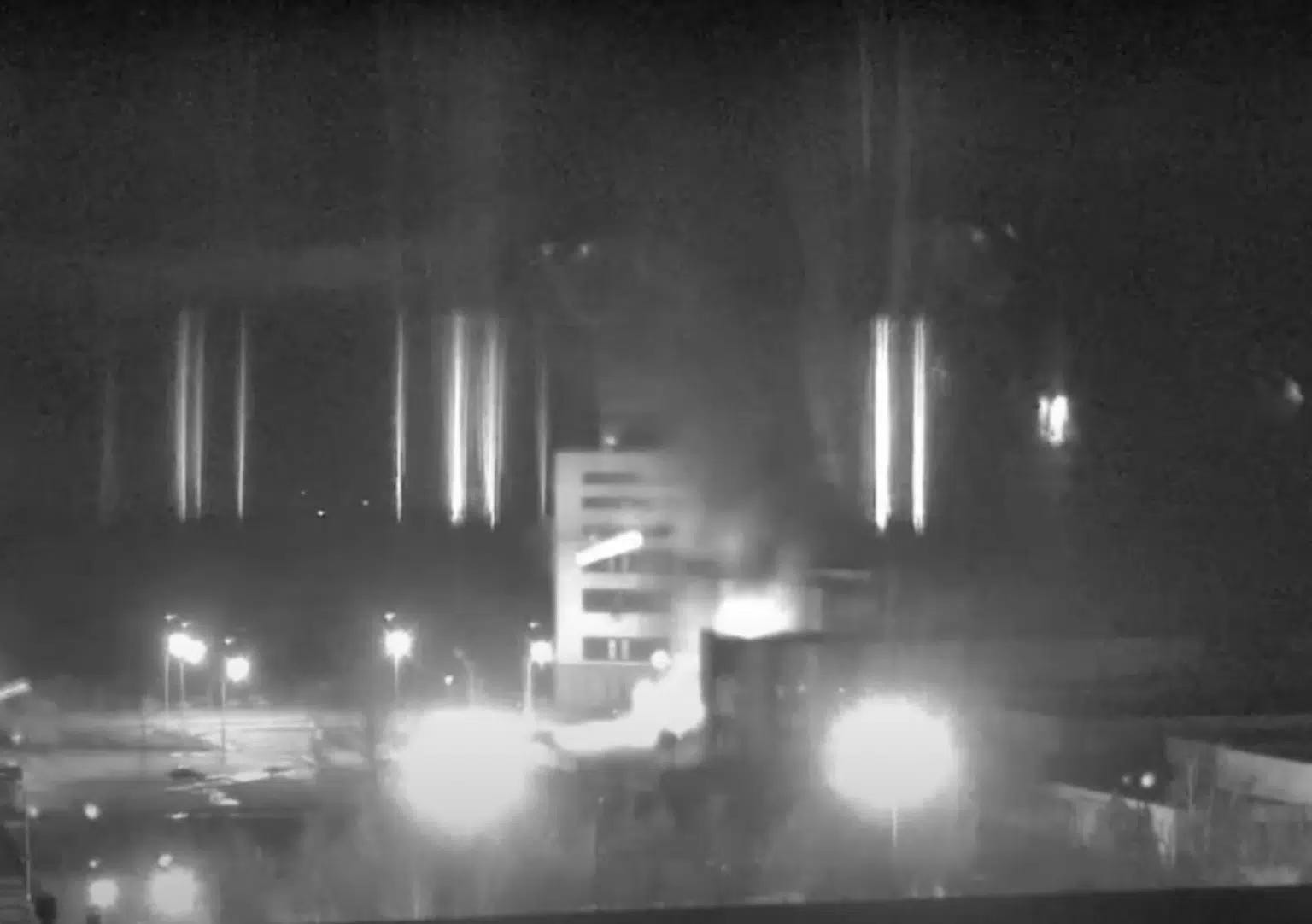
Screenshot of a video of the Russian attack on the Zaporizhzhia nuclear power plant.
The House Armed Services Committee is proposing legislation to protect Energy Department -operated nuclear facilities from potential drone attacks. This action does not address the need to protect the nearly 100 other civilian reactors that are not part of the Department of Energy infrastructure. During 2024 there were some 26-odd drone overflights of U.S. reactors and four drones were sighted in 2025 operating near the Prairie Island Nuclear Plant in Minnesota. There are calls for more clarity on plans to protect nuclear reactors.
2.
Burying nuclear reactors might make them cleaner and cheaper (T)
Deep Fission, a nuclear power firm in Berkeley, California, is seeking to implement a concept of its founder, Elizabeth Muller, to create a nuclear reactor at the bottom of a mile deep shaft. Such a construct could produce energy without the need for pressurization and shielding and, once sealed at the end of its lifetime, would also provide a secure location for the reactor’s
waste. The concept is to lower the reactor core to the bottom of a 75 cm diameter shaft and then flood the shaft with water. The weight of the water in the shaft would provide the pressure needed to keep the water from boiling. The shaft would also provide a containment structure. Heat would be removed through a pipe in the shaft as is done in extracting geothermal power. The core would be loaded with a two year supply of uranium fuel, afterward a new core would be lowered on top of the exhausted uranium. Deep Energy had been picked by the Department of Energy for its accelerated Reactor Pilot Program. Deep Fission has signed an agreement with Endeavor, an American data-center company.
3.
Companies see big chance to spin nuclear straw into usable gold(P)
Oklo announced plans to build a fuel recycling facility in Tennessee as the first phase of an advanced fuel center totaling up to $1.68 billion. The fuel is slated for use in Oklo’s fast Aurora reactor. Oklo is exploring opportunities with the Tennessee Valley Authority to recycle the utility’s used fuel. This plan has been received with skepticism by Edwin Lyman of the Union of Concerned Scientists. Scientists at the Nuclear Threat Initiative
Have also expressed doubts about the viability of such a plan. However, Curio has also announced that it plans to implement such recycling of waste into fuel. The argument for the use of recycled fuel rests on the opportunity to power “fast” reactors. The fuel for such reactors is High Assay Low Enrichment (HALEU) uranium that is enriched between 5% and 20%. The U.S. has a need to develop facilities for production of such fuel.
4.
President Lee Jae-myung ( of South Korea ) dismisses nuclear power, urges solar and wind expansion(P)
On September 11th the President of South Korea, Lee Jae-myung, stated that plans to rely on nuclear power to meet AI electricity needs are unrealistic because “it takes at least 15 years to build a nuclear plant” and comments that there are limited sites that are available. He advocated building solar and wind sites.
A nuclear industry spokesperson expressed fear that this posture could lead to the collapse of the nuclear ecosystem in South Korea President Lee’s opposition to nuclear energy is being met with push back from the nuclear industry.
5.
US and UK sign major nuclear power deal: What does it include? (P)
September 18. British Prime Minister Keir Starmer and United States President Donald Trump have signed a multibillion-pound deal to expand nuclear power across both nations. Known as the Atlantic Partnership for Advanced Nuclear Energy, the agreement aims to speed up the construction of new reactors and provide reliable, low-carbon energy for high-demand sectors, including energy-intensive artificial intelligence data centres. Britain’s largest energy supplier, Centrica, will pair up with the US firm X-energy to develop up to 12 advanced modular reactors in Hartlepool, a port town in northeast England, which could power 1.5 million homes and create up to 2,500 jobs. US nuclear technology company Holtec, France’s state-backed energy giant EDF Energy, and United Kingdom real estate and investment firm Tritax will develop advanced data centres powered by small modular reactors (SMRs) in Nottinghamshire, East Midlands, valued at about 11 billion pounds ($15bn). London and Washington will also build on an existing collaboration between British Rolls-Royce and American BWXT alongside new commercial projects.
The UK currently has eight nuclear power stations, all managed by EDF Energy. Five of these stations are currently generating electricity – Sizewell B, Torness, Heysham 1, Heysham 2 and Hartlepool, while three – Hunterston B, Hinkley Point B and Dungeness B have ceased generation and entered the defuelling phase of decommissioning.
This new relationship will also include nuclear regulation allowing a safety approval in one country to support approval in the other country, thus allowing a cutting of licensing times by more than a year.
6.
Russia’s next-gen liquid metal nuclear fuel assembly to push fast reactor boundaries (T)
Russia’s Rosatom Fuel Division is implementing a new type of fuel assembly with a mixture of nitride uranium-plutonium having a liquid metal sublayer for use in a fast reactor. The liquid metal sublayer provides improved heat transfer in the system and reduces swelling that could otherwise occur in the fuel pellet. This enhances the reliability of the fuel and allows higher burnup targets. The fuel is reprocessed to fabricate new fuel in a closed cycle. A 300 Mwe demonstration unit is being developed which, if successful, will be followed by a 1200 MWe reactor. This new fuel promises more effective operations of the BREST reactor.
7.
“We Don’t Need Russia Anymore”: American Company Completes Nuclear Fuel Revolution That Destroys Foreign Energy Dependence Forever ( C )
Global Laser Enrichment, a company based in Wilmington, NC, has achieved a major breakthrough with a large-scale demonstration of laser-based uranium separation. Using the SILEX process that they acquired from SILEX Systems in Australia, Uranium 235 is separated from a mixture that is dominated by Uranium 238. Silex stands for Separation of Isotopes by Laser EXitation. In this process the Uranium is transformed into a gaseous form as Uranium Hexaflouride. Using a precisely tuned laser, the gas molecules with Uranium 235 are selectively ionized. The charged ions are then separated using electric fields. With the rapid expansion in the use of nuclear energy this development is a significant step toward certification of a U.S. commercial processing facility for enriched Uranium. The U.S. needs expanded production that meets growing fuel needs that do not rely on Russian sources.
8.
Iran says deal with Russia will build eight nuclear power plants ( C )
Iran and Russia are planning to sign an agreement for construction of eight nuclear power plants. Four of the plants are planned to be located at the Bushehr site where Iran’s only nuclear plant is located. This is part of Iran’s long term plan to expand nuclear capacity to 20 gigawatts by 2040. This announcement came as Britain, France and Germany seek to reimpose sanctions against Iran for violating a 2015 nuclear agreement.
9.
Kenya signs landmark cooperation deal on nuclear energy with South Korea ( C )
The Kenya Nuclear Power and Energy Agency (NuPEA) and the Korea Atomic Energy Research Institute (KAERI) have signed an agreement to collaborate in developing nuclear energy for Kenya. They plan to continue pursuing a feasibility study that has been partially completed for nuclear power development in Kenya. Few details are available.
10.
Inside the zero-revenue nuclear stock whose 1,500% rally is shaking up the AI trade (P )
Oklo has yet to record a single dollar in sales, yet it rallied 520% in 2025 and 1,500% in 2024. Oklo is developing and commercializing small modular reactors (SMRs) with a huge potential market with AI data centers. The company went public in 2024 with Sam Altman’s special-purpose acquisition company AltC Acquisition Corp. Investors are speculating on the potential future growth of this enterprise. As of September 25, 2025 it had a valuation of $20 billion, the largest pre-revenue company in the United States. This is happening in spite of the fact that revenues are not expected until at least the fourth quarter of 2027.
11.
Where will NuScale Power Be in 5 Years? (P)
Another company with a valuation that bears little relationship to its income is NuScale, with a market value in September 2025 exceeding $10 Billion and losses in 2024 of $136 million. In support of the value of NuScale is its position as the only Small Modular Reactor to have received design approval from the Nuclear Regulatory Company. It did have contracts for deployment of its promising design, but these were canceled due to changes in the projected construction costs. NuScale is engaged in ongoing planning and negotiations with the power company in Romania for construction of six 77 Megawatt Modular reactors. The Import-Export Bank provided a $98 million loan to support this design study.
12.
Russia and Ethiopia sign agreement to develop nuclear power plant ( C )
Expanding the level of nuclear energy development in Africa, an announcement was made that Russia and Ethiopia plan to construct a nuclear reactor with a date for completion in the 2032-34 time frame. However, details are not yet available.
13.
Niger Plans Two 1,000 MW Nuclear Reactors with Russia as Partner ( C )
Adding to the expansion of nuclear energy in Africa is Niger, which has announced plans to construct two 1,000 MW reactors with Russia as a partner. This plan anticipates a major growth in electrification in Niger which currently has the second lowest electrification rate of 20% in 2022.
14.
New nuclear financing models need to be developed says Putin (P)
Russia’s President, Vladimir Putin, stated at the World Atomic Week in Moscow ( September 26, 2025 ) that he sees peaceful nuclear technologies as the basis for international cooperation and bringing states closer together. He stated that he foresaw major growth of nuclear energy in the Global South and East. Given the costs for nuclear resource development he saw a need for the development of new models for financing nuclear power plants that involved international financial institutions and development banks. He also announced the launch of a Russian nuclear energy system that would operate with a closed fuel cycle that would see 95% of fuel reused repeatedly, thus helping solve the issues of radioactive waste as well as limited uranium resources.